TITAN

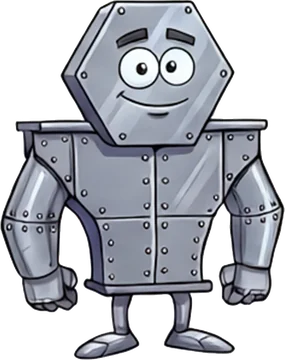
Strong-willed, keeps his word, and expects everyone else to keep theirs. Secure, self-confident, hard to dent. Does not ask why — in his words, questions are drag.
Seven materials. Seven cadets. Six missions, and two places that are not missions at all.
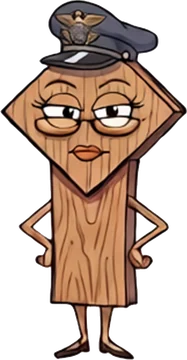
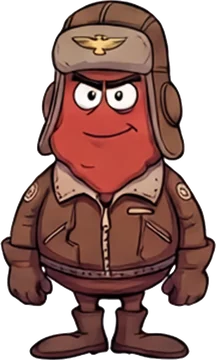
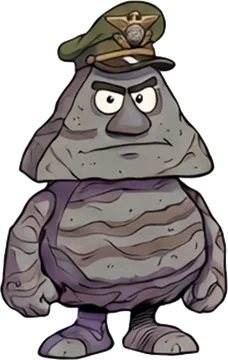
Every one of the seven Mind My Material families has a cadet here. Each one appears twice on this page: as drawn in the book A Polymer’s Plight with Flight, and as the shape and colour that family already carries on the quiz. And they behave the way that material behaves — because the material is the character. Titanium is proud and hard to dent. Rubber says yes to everything and does not always spring back. Ceramic gets it right the first time, and shatters when something hits it fast.
This page is the cast, and what each one is actually good at. It does not tell the story.
One per family. Really built for is not a story decision — it is what the numbers say, the same numbers the Flight Test runs. A cadet does not always fly what he is built for, which is rather the point.

Strong-willed, keeps his word, and expects everyone else to keep theirs. Secure, self-confident, hard to dent. Does not ask why — in his words, questions are drag.

Protection and openness in the same material — he takes the hit and you can still see straight through him. Calmer under pressure than any other polymer in the class.

Boundless energy, tongue out, a hoo-hah before every dive. The youngest on the field, and the first to say yes to anything.

Precise and principled. Gets it right the first time, and then checks the list twice anyway.

The best strength for his weight in the whole class. Strategic and collaborative, and hard to read the first time you meet him. Always takes the coat.

Takes the shape of whoever rests on him, and slowly remembers it. Soft when you lean on him slowly, firm the instant something hits him fast. Quiet all day.

The fastest-growing structural material on Earth — flexible strength, and a great deal of it very quickly. Bends through a typhoon. Arrives by hand where steel needs a crane.
Older versions of the same seven families, each teaching one mission. They sit on the ground with a remote link rather than in the back seat, so every cadet flies alone and still has somebody standing there. Two of them are senior commanders and can take control when they judge it necessary. Notice that what an instructor teaches is often not what he is built for — which is what makes him worth listening to.

Does not ask questions either — but he reads every gauge. Holds the standard in the places where everyone else has let it tarnish.

Old-school layers glued across one another — wisdom made out of contradictions held together. Quiet, patient, rides the air.

Cracked, scarred, and better for both. His line: you don't wear out, you wear in.

The same temperament from arctic cold to oven heat. Snaps a roll over the field every dawn, just because.

Nothing sticks to him and nothing rattles him. Sits in the back seat and almost never needs to touch anything.

Unhurried. Permanence is his address. He has seen every kind of crash there is, and says so very rarely.

Absorbs impact without complaint. Yellowed and a little squashed from decades of doing it. He is the crash pad, and he knows it.
Every mission has its own aircraft, and every aircraft asks something different of whatever it is made from. The six are what a cadet can be given. The two places are where a cadet finds out, and where a cadet gets put back together.
Each aircraft’s limits and landings are estimates for that aircraft. The pattern of loads it flies is typical of its kind of aircraft, not measured on it.
A jet built to climb straight up and turn hard. Big loads, short flights, hard pulling every day. The roughest life on the list.
No engine at all; long thin wings riding the air. The gentlest life for bending — and the harshest for sunlight.
Heavy, steady, going a long way, carrying everyone else’s things. Endurance matters here, not speed.
Short, stubby, built for rolls and extremes. Everything at once, in short bursts, chosen purely for the joy of it.
Two seats, one behind the other. Built to be handled badly and to forgive it — and to land about 2.8 times an hour.
On call, any weather, going where nobody else can. Every landing is a hard one, on ground nobody prepared.
Where an aircraft is measured. You find out what you are really made of — and unlike a mission, nobody gives it to you. You go.
Where you get repaired, coated and groomed. Cadets say the Depot is for the broken. It is not.
Every cadet is offered a test before choosing. Characterise your material before you load it. It is voluntary, so some take it and some do not — and of the ones who take it, not all of them read past page one.
Page one tells you what you are. Page two ranks the six missions for you and names the two you are actually built for. That second page is the thing this whole apparatus exists to produce, and you can run it yourself on any of the 45 materials at the Flight Test.
The first story follows the polycarbonate cadet through one course at the Academy. It is about who you decide to be like, what that costs somebody standing next to you, and how long it takes to hear your own instrument over somebody else’s engine.
It is being built now as a short animated film and a podcast episode, and as a picture book that is now in production. The cast above is its cast; the missions above are its missions; the numbers on every card are the ones the Flight Test computes.